
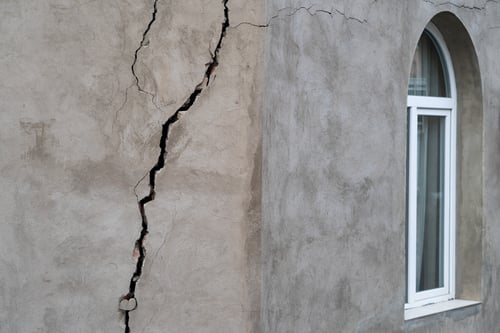
Stucco is one of the most durable exterior finishes there is, as long as water stays out of it. The trouble in Massachusetts is the freeze-thaw cycle. Water gets into a small crack, freezes overnight, expands, and makes the crack a little bigger. Repeat that a few dozen times a winter and a hairline crack becomes a real problem.
Each spring, walk around the house and look closely at the stucco. Hairline cracks are common and usually cosmetic, but cracks wider than a credit card's edge, cracks that run diagonally from window corners, or cracks with rust or dark staining around them deserve attention.
Pay special attention to the bottom of the walls, the areas under windows, and anywhere a roof line or deck meets the wall. Those are the places water collects. Bulging, soft spots, or sections that sound hollow when tapped can mean water has already gotten behind the surface.
Small cracks can be cleaned out and patched with a matching texture. Larger damaged areas need to be cut out down to the lath, checked for wet sheathing, and rebuilt in layers. Patching over a wet wall only hides the problem.
The best time to fix stucco is late spring through early fall, when temperatures let the material cure properly. If you spot trouble in April, get an estimate early so the repair is done well before the next freeze.