
If your house was built before the 1950s, there's a good chance your walls are plaster over wood lath. Massachusetts is full of them, from Worcester triple-deckers to Newton colonials. And almost all of them have cracks. That doesn't mean they're failing.
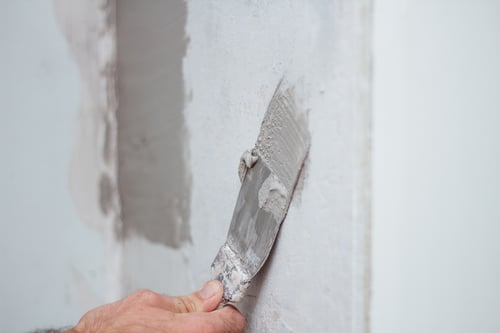
Hairline cracks running from the corners of doors and windows are normal. The house has moved a little over a century, and plaster is rigid. These can be taped and skim coated, and the wall will look new.
The thing to check is whether the plaster is still attached. Press gently near a crack. If the plaster moves, flexes, or sounds hollow, the 'keys' that lock it to the lath have broken. Loose plaster can often be reattached with plaster washers and adhesive before skim coating, but large areas of loose or bulging plaster, especially on ceilings, are a sign that replacing is the better option.
Water damage changes the answer too. Plaster that has been soaked repeatedly gets soft and crumbly, and the lath behind it may be stained or rotted. Those sections should come out, and the new board should be plastered to match the walls around it.
The honest answer is usually a mix: save the walls that are sound, replace the sections that aren't, and skim the whole room so it reads as one surface. A good plasterer will walk the room with you and show you which is which before giving you a price.